

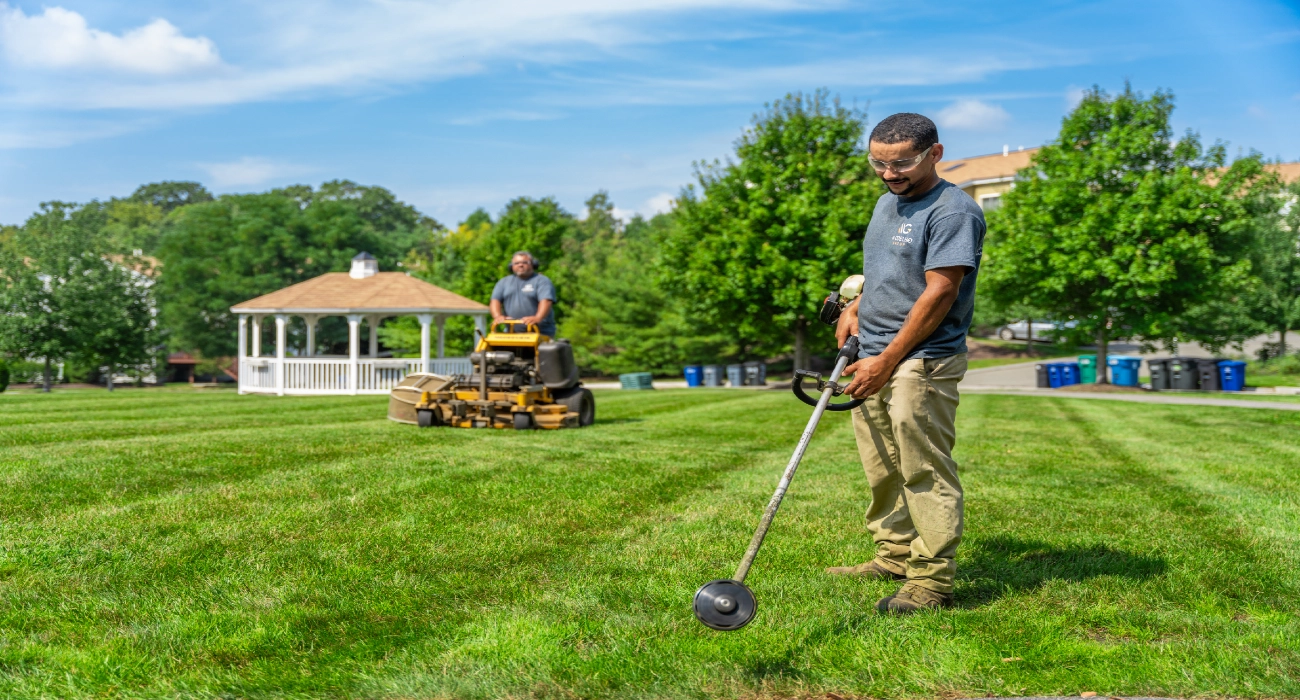
If your lawn looks tired despite regular watering and fertilizing, the problem might be underground. Compacted soil stops water, air, and nutrients from reaching the roots — and no amount of surface care fixes that. Lawn aeration is the solution, and in Massachusetts, timing it right makes all the difference. Here’s what every homeowner should know before booking an aeration service.
What Is Lawn Aeration?
Lawn aeration is the process of creating small holes in your soil to relieve compaction and allow air, water, and nutrients to reach the grass roots. The most effective method is core aeration, which removes small plugs of soil and thatch from the lawn rather than just poking holes in the surface.
Over time, soil naturally compacts — from foot traffic, mowing, rainfall, and the freeze-thaw cycles common across Massachusetts winters. Compacted soil is one of the most common reasons a lawn struggles even when it’s being watered and fertilized properly. Aeration reopens the soil so your lawn can actually absorb what you’re giving it.
Why Lawn Aeration Matters in Massachusetts
Massachusetts lawns face specific conditions that make aeration especially important. Much of the region has clay-heavy soil, which compacts faster and drains more slowly than sandy soil. Combined with cold winters and heavy spring moisture, that means local lawns are particularly prone to compaction.
Here’s what aeration does for your lawn:
- Improves water absorption — water reaches the roots instead of pooling or running off compacted ground.
- Strengthens root systems — roots grow deeper and denser when they have room and access to oxygen, making your lawn more drought-resistant.
- Boosts fertilizer effectiveness — nutrients reach the root zone instead of sitting on the surface, so you get more from every application.
- Reduces thatch buildup — core aeration breaks up the layer of dead material that can suffocate healthy grass.
- Prepares the lawn for overseeding — the holes created by aeration are ideal spots for new seed to establish, which is why aeration and overseeding are often done together.
When Should You Aerate Your Lawn in Massachusetts?
For Massachusetts lawns, fall is the best time to aerate. Most local lawns are cool-season grasses — fescues, bluegrass, and ryegrass — which do most of their growing in the cooler months of spring and fall.
Fall aeration works best because:
- The soil is still warm enough for roots to recover and grow
- Cooler air reduces stress on the grass
- It pairs perfectly with fall overseeding and fertilization
- New growth has time to establish before winter dormancy
Early spring is the second-best window, particularly if your lawn is heavily compacted or you missed the fall opportunity. What you want to avoid is aerating during summer heat, when cool-season grasses are already stressed and slow to recover.
How Often Should You Aerate?
Most Massachusetts lawns benefit from aeration once a year. Lawns with heavy clay soil, high foot traffic, or a history of compaction may need it annually without fail, while lawns on lighter soil with less use can sometimes go every other year.
A few signs your lawn needs aeration sooner rather than later:
- Water pools on the surface instead of soaking in
- The soil feels hard and difficult to push a screwdriver into
- Grass looks thin or stressed despite regular care
- There’s a spongy, thick thatch layer above the soil
- High-traffic areas are visibly worn or bare
If you’re seeing any of these, it’s worth having your lawn assessed before the problem sets your whole season back.
DIY vs Professional Lawn Aeration
Rental aerators are available at hardware stores, and for a small, flat lawn, a DIY approach can work. But there are real reasons most homeowners hand aeration to a professional.
Rented equipment is heavy, awkward to transport, and often doesn’t pull consistent cores. More importantly, aeration is most effective when it’s timed correctly and paired with overseeding and fertilization — a sequence that a professional lawn care service handles as one coordinated treatment. Getting the timing wrong, or aerating without following up, wastes the effort.
A professional service also assesses whether aeration is actually what your lawn needs, or whether the real issue is drainage, soil health, or something else entirely.
Professional Lawn Aeration From M Coelho Group
M Coelho Group has been caring for Massachusetts lawns since 2003. Core aeration is part of our complete lawn care and turf management programs, and we time it to match your lawn’s specific needs and the local growing season — often pairing it with overseeding and fertilization for the best results.
Whether your lawn needs a one-time aeration or an ongoing maintenance program, our team will assess your property and recommend exactly what it needs. We serve Bellingham, Franklin, Medway, Millis, Norfolk, Walpole, Norwood, Needham, Wellesley, Medfield, and surrounding Massachusetts communities.
Frequently Asked Questions About Lawn Aeration
Does aeration really make a difference?
Yes — for compacted lawns, aeration is one of the most effective treatments available. It directly addresses a root-level problem that surface care like watering and fertilizing can’t fix on its own.
Should I aerate and overseed at the same time?
In most cases, yes. The holes created by core aeration are ideal spots for new seed to make soil contact and establish, which is why the two are commonly done together in the fall.
Will my lawn look messy after aeration?
The soil plugs pulled during core aeration are left on the surface and break down within a couple of weeks. It’s completely normal and actually returns nutrients to the lawn as they decompose.
How long does aeration take to show results?
You’ll typically see improvement within a few weeks as roots respond, with fuller results the following growing season — especially when aeration is paired with overseeding and proper fertilization.
How do I book lawn aeration in Massachusetts?
Call (508) 966-2700 or fill out our online form. We’ll assess your lawn and recommend the right aeration schedule for your property.